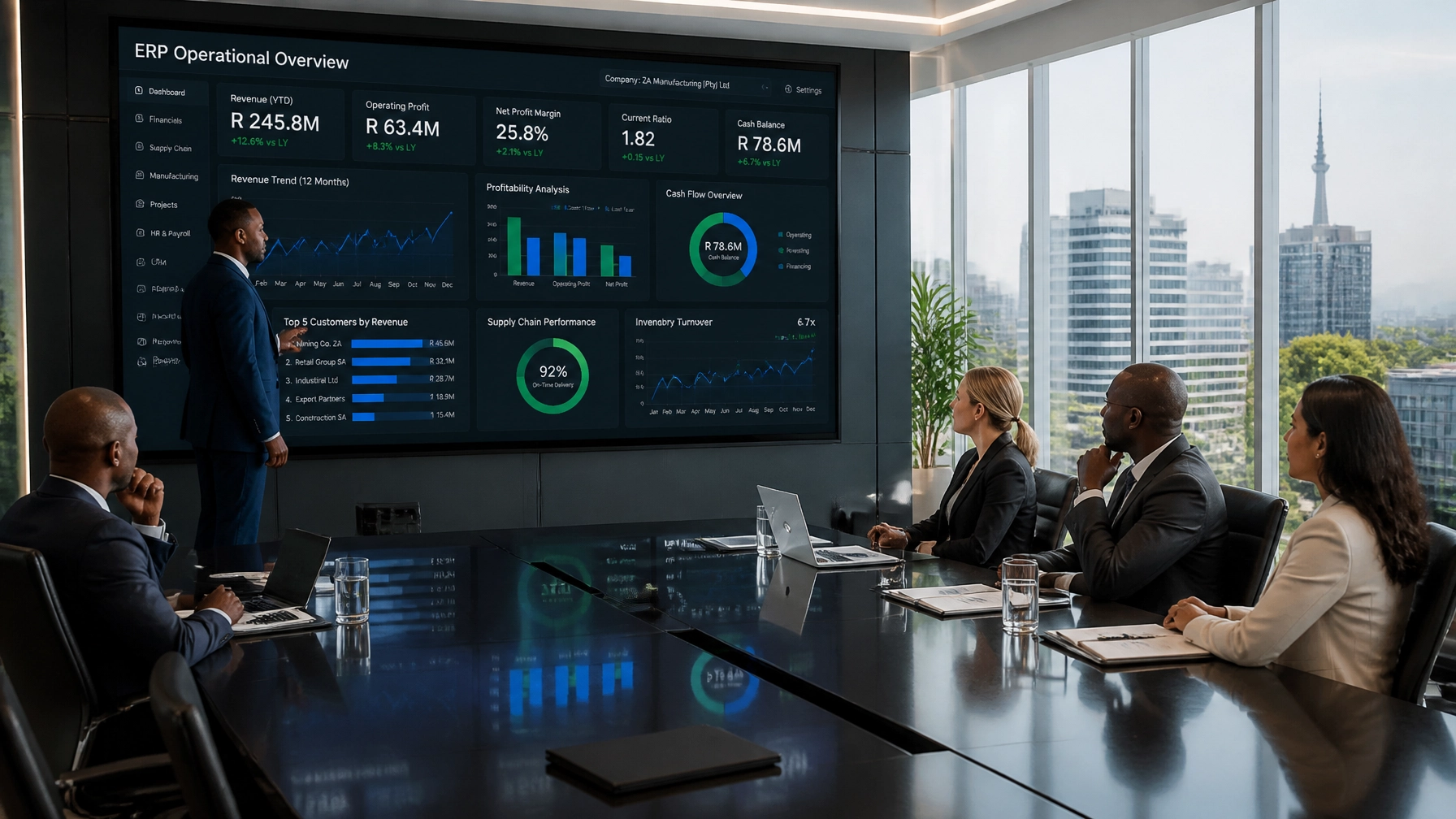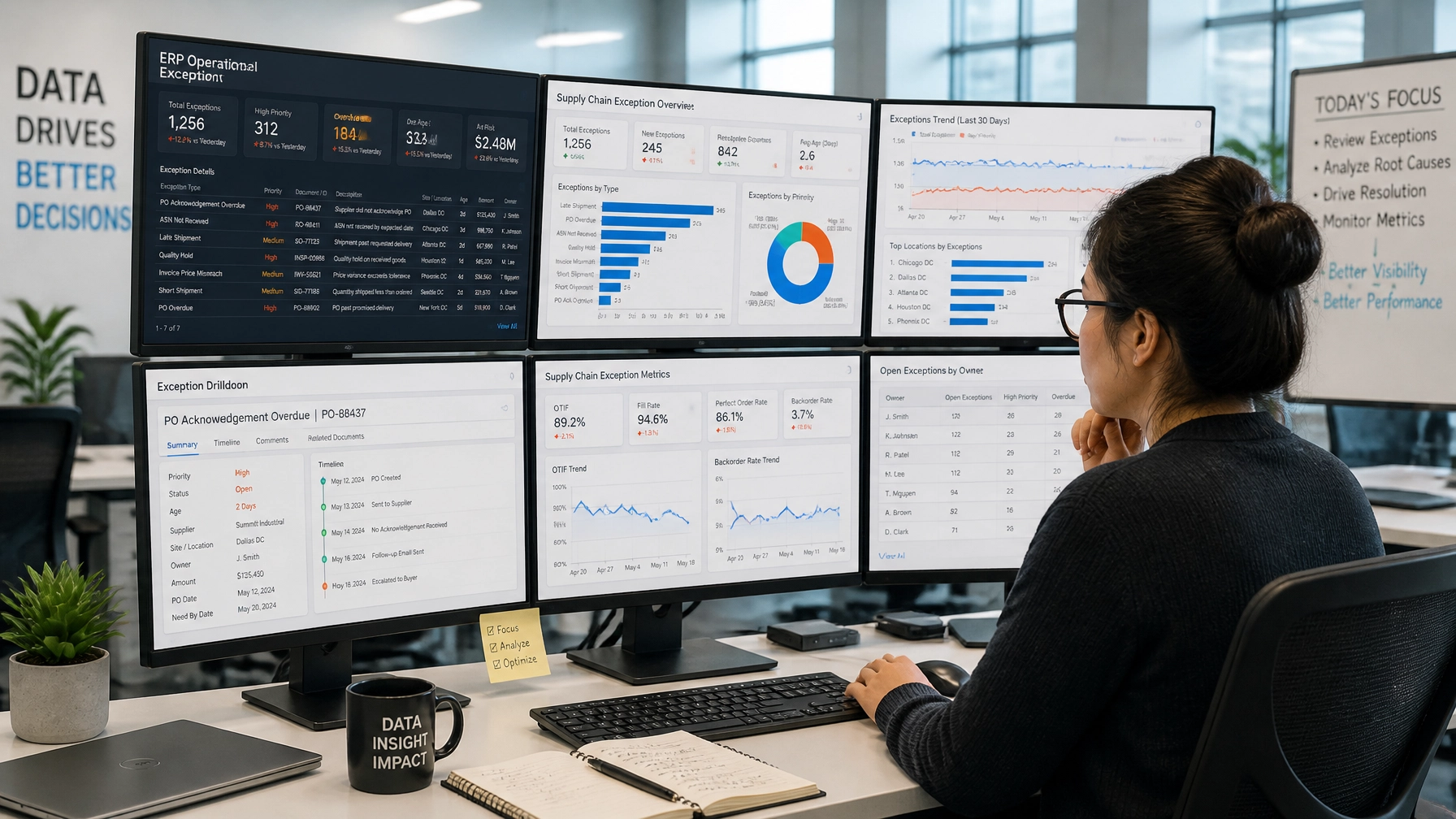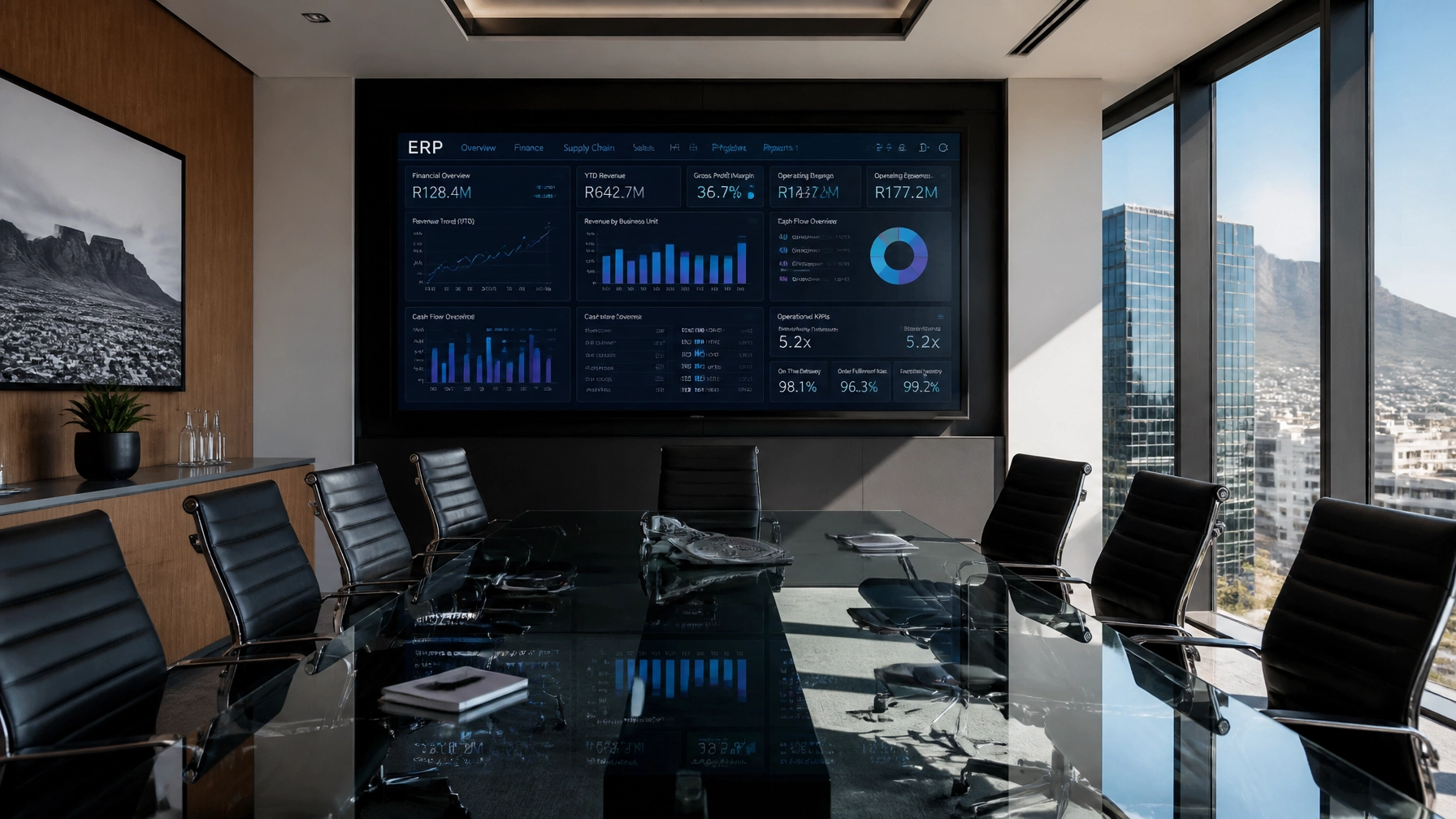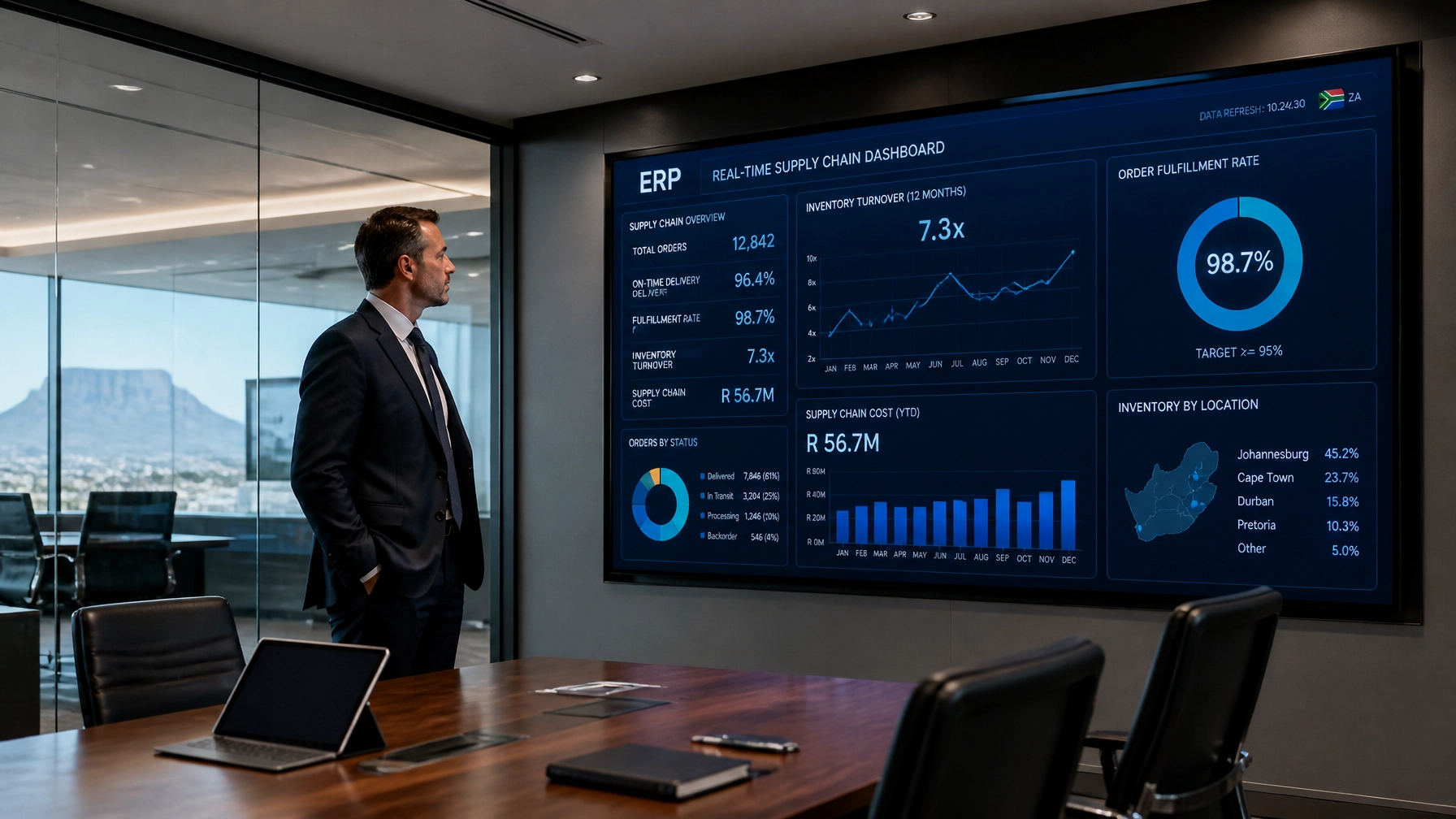
Meta description: How ERP partners selling Sage, SAP, Syspro and Acumatica can automate acquisition, filter free-demo requests and build a qualified discovery pipeline.
Reading time: 7 minutes
Categories: B2B Acquisition · ERP Sales Strategy · Pipeline Automation
For a South African ERP implementation firm, lead generation cannot be separated from the vendor ecosystem you sell.
A Sage prospect does not think about software in the same way as an Acumatica prospect. A Syspro buyer expects evidence that you understand manufacturing operations. An SAP opportunity may involve a formal business case, multiple stakeholders and a migration roadmap before a serious commercial conversation can begin.
Yet many implementation firms use the same acquisition message for all four.
That creates predictable problems:
- Generic enquiries from companies without a defined project
- Free-demo requests from people researching software rather than approving budgets
- Senior consultants spending hours explaining basic ERP concepts
- Poor visibility into which leads are commercially viable
- Long delays between first enquiry and meaningful discovery
The solution is not more demos. It is an Automated B2B Acquisition System configured around the operational language, buying triggers and qualification requirements of each ERP ecosystem.
The cost of the unqualified ERP demo
A free demo appears inexpensive to the prospect. It is not inexpensive for the implementation firm.
A typical demo may involve:
- A senior sales representative qualifying the enquiry
- A solution architect preparing the demonstration
- A consultant tailoring workflows or sample data
- A follow-up meeting and proposal discussion
- Internal coordination before and after the call
If a senior representative and technical consultant collectively spend four to eight hours on an unqualified opportunity, the real cost can be significant. For illustration, at a loaded internal cost of R1,500 to R3,000 per hour, one poorly qualified demo can consume approximately R6,000 to R24,000 in productive capacity.
The larger cost is opportunity cost. Those hours could have been spent on:
- A budget-ready manufacturing group
- A multi-entity finance transformation
- A live migration opportunity
- A proposal with a realistic R500k-plus implementation value
- Existing-client expansion and account management
The correct objective is therefore not to maximise demo volume. It is to maximise the number of qualified discovery conversations reaching the right senior person.
One acquisition system, four vendor-specific applications
An Automated B2B Acquisition System typically combines:
-
Targeted LinkedIn and Google B2B traffic
Campaigns are directed at business roles, industries, company profiles and ERP-related buying signals. -
Automated Executive Briefings
Prospects receive an on-demand video briefing that explains the business case, implementation considerations and expected outcomes before a sales meeting. -
Qualification and scoring
The system captures information such as current ERP, operational complexity, project timing, budget range, decision authority and implementation requirements. -
CRM integration
Behavioural and form data are sent into the CRM so sales teams can see what the prospect engaged with and how urgently the opportunity should be handled.
The architecture remains consistent. The message, evidence and scoring model change by vendor.

Sage: replace the legacy perception with operational proof
Sage has strong recognition in finance and business management. That recognition can work against an implementation partner when prospects associate the platform with older, narrowly financial deployments.
A Sage acquisition system should therefore avoid broad claims about “digital transformation”. It should answer practical questions:
- Can the platform support multi-entity operations?
- How will finance connect with inventory, purchasing and distribution?
- What happens to data migration and reporting?
- Can the implementation scale as the organisation expands?
- Which processes will improve first, and how will that improvement be measured?
For Sage X3 and Sage Intacct opportunities, the Executive Briefing should establish the commercial and operational context before the first conversation. The partner can then position implementation around business outcomes such as:
- Faster month-end reporting
- Better control across entities and locations
- Reduced manual reconciliation
- Improved inventory and purchasing visibility
- A structured migration away from disconnected systems
The Sage partner directory and Sage’s implementation guidance reinforce the importance of partner-led configuration, migration and support. Your acquisition content should make that expertise visible before asking a prospect to book time.
SAP: qualify the transformation, not just the software interest
SAP acquisition is rarely a simple product enquiry. Depending on the opportunity, the buyer may be considering SAP Business One, SAP S/4HANA or a broader ERP and cloud transformation.
That means an SAP partner must qualify more than interest in a demo. The system should identify:
- The current SAP or legacy environment
- Whether the project is a new implementation, migration or optimisation
- The business units and countries involved
- Integration and data migration requirements
- The internal decision group
- The target timeframe and approval process
- Whether the prospect is still researching or has an approved initiative
SAP buyers often need confidence around risk, governance and implementation capability. An Executive Briefing should therefore explain the stages of a serious project:
- Discovery and process analysis
- Solution and scope definition
- Data migration and integration planning
- Business case and total cost evaluation
- Testing, training and go-live support
The SAP Partner Finder is a useful reference for understanding how SAP categorises partners and solutions. Your own acquisition system should be equally specific. A prospect searching for S/4HANA migration should not receive the same journey as a mid-market company evaluating Business One.
Syspro: speak to the factory floor and warehouse
Syspro is closely associated with manufacturing and distribution. Its acquisition messaging must reflect how those businesses actually operate.
A manufacturer does not begin with abstract software language. The conversation starts with:
- Production scheduling
- Bills of material and revisions
- Work-in-progress visibility
- Quality and traceability
- Material requirements planning
- Job or batch costing
- Warehouse accuracy
- Picking, replenishment and dispatch
- The connection between inventory and the production line

For a Syspro partner, targeted traffic should focus on industries and operational problems rather than generic ERP keywords. Campaigns can be built around manufacturing complexity, warehouse inefficiency, stock visibility, production planning or multi-site distribution.
The Executive Briefing should use the prospect’s language. It should show how an implementation addresses the flow from receiving raw materials to production, inventory control and outbound delivery.
Syspro’s official resources on manufacturing software and warehouse management provide useful context for this positioning.
The qualification model should also distinguish between a small administrative enquiry and a serious operational project. A prospect with multiple sites, production constraints, traceability requirements and a defined improvement initiative is materially different from someone who simply wants to “see what Syspro looks like”.
Acumatica: lead with cloud economics and adoption
Acumatica has a different commercial conversation. Its cloud ERP model is commonly positioned around unlimited users and resource or consumption-based pricing rather than a simple per-user licensing structure.
That creates a strong acquisition angle, but it must be handled carefully. Prospects need to understand that total cost depends on factors such as:
- Required applications and editions
- Transaction volume
- Resource requirements
- Manufacturing or distribution complexity
- Integrations and customisation
- Data migration
- Training and ongoing support
The important contrast is not “cheap versus expensive”. It is whether the commercial model aligns with the way the organisation operates and grows.
An Acumatica Executive Briefing can explain:
- Why user count is not the only measure of ERP cost
- How more warehouse, shop-floor or approval users affect adoption
- Why transaction volume and functionality still matter
- How to evaluate three-year total cost of ownership
- Which implementation assumptions must be confirmed before a proposal
Acumatica’s official pricing page explains its approach, while its ERP cost guide provides additional context. The acquisition system should use those principles to create a more informed first conversation, not make unsupported pricing promises.
Manual discovery versus automated discovery
The following comparison is illustrative. Actual results depend on traffic quality, offer relevance, sales execution and implementation capacity.
| Operating measure | Manual discovery model | Automated discovery model |
|---|---|---|
| Initial education | Repeated by sales representatives | Delivered through an on-demand Executive Briefing |
| Qualification | Often based on a short form or first call | Based on role, vendor, project, timing, budget and engagement |
| Senior rep involvement | Starts before buying readiness is known | Begins after minimum qualification criteria are met |
| CRM visibility | Notes added inconsistently | Lead source, briefing engagement and score are integrated |
| Demo preparation | Frequently speculative | Based on declared requirements and observed interests |
| Follow-up priority | Enquiry order or salesperson judgement | Score, fit and buying behaviour |
| Operational result | More meetings, mixed quality | Fewer unqualified meetings, stronger discovery conversations |
The economic benefit comes from reallocating expert time.
If automation prevents five unqualified demos per month and each would have consumed four hours of senior capacity, the firm recovers 20 hours. That time can be directed toward qualified opportunities, strategic accounts and delivery planning.
For an ERP firm selling R500k to R5m implementations, that is a capacity decision: not a marketing vanity metric.
What the CRM should receive
A properly integrated system should give sales a usable opportunity record, not just a name and email address.
Useful CRM fields include:
- ERP vendor and current system
- Industry and operating model
- Number of entities, sites or warehouses
- Manufacturing or distribution requirements
- Primary business problem
- Project stage
- Expected decision timeframe
- Budget range or funding status
- Decision-maker role
- Executive Briefing watched or completed
- Pages or topics engaged with
- Qualification score
- Recommended next action
This allows the Sales Director to define routing rules. For example:
- High-fit, high-engagement leads go directly to a senior representative
- Early-stage prospects enter a structured education sequence
- Poor-fit enquiries are filtered without consuming consulting capacity
- Existing customers are routed separately for expansion conversations
Build the pipeline around the vendor ecosystem
Sage, SAP, Syspro and Acumatica require different proof, language and qualification criteria. A generic lead-generation campaign will obscure those differences.
A stronger acquisition system:
- Matches traffic to the specific vendor and operational problem
- Educates prospects before a discovery call
- Captures buying context in the CRM
- Scores fit and intent together
- Reduces the free-demo drain on senior representatives
- Creates a repeatable source of warm, budget-ready conversations
VRDStudio builds Automated B2B Acquisition Systems for ERP and CRM implementation firms. The system uses targeted B2B traffic, Automated Executive Briefings, qualification logic and CRM integration to build a pre-qualified discovery pipeline.
Call to action
Ready to stop wasting your top reps' time on unqualified demos? Register for our free webinar “The Death of the Free ERP Demo” at VRDStudio or visit VRDStudio to learn more.